Respond to Negative Reviews: 5 Steps, Templates, and Platform Rules
Respond to Negative Reviews: 5 Steps, Templates, and Platform Rules

Reply publicly, briefly, and professionally: thank the reviewer, acknowledge the specifics of their complaint, apologize, outline a concrete next step, and invite them to continue the conversation privately. Aim to post your reply within 1 to 2 business days, since most customers expect some response within a week. Keep the structure consistent every time and you turn a bad moment into proof that someone is paying attention.
TL;DR:
- Keep public replies brief and tailored, ideally three to five sentences and under roughly 100 words; respond within one to two business days.
- Check order records, appointment logs, support tickets, and staff accounts before replying, so you do not contradict evidence or promise an unauthorized refund.
- Move sensitive details to private channels, then post a brief public update after resolution; satisfied customers may be asked to revise reviews without compensation.
- Flag reviews only for policy violations; Google bars incentives for edits, while Yelp can filter reviews as not recommended without removing them.
Table of Contents
- The 5-step framework for replying to any negative review
- Response templates and examples by scenario
- Platform rules you need to know before you reply
- Handling unclear, false, or malicious reviews
- Turning a negative review into a positive outcome
- Showing your review management on your own site
- Why public, professional replies are an investment, not damage control
- Showcase your replies and reviews with Zyff
- FAQ
- Sources
The 5-step framework for replying to any negative review
A good reply follows the same shape every time, whether the complaint is about a cold burger or a missed delivery window. According to Harvard Business School research on review responses, the most effective replies are quick and tailored to the specific complaint rather than generic, and they typically run 3 to 5 sentences.
Here is the sequence worth memorizing:
- Address the reviewer directly. Use their name if the platform shows one; it signals a human read the complaint instead of a bot.
- Thank them for the feedback. Even sharp criticism deserves a genuine line of appreciation before anything else.
- Acknowledge the specifics and apologize. Repeat back what went wrong in your own words, which shows you actually read the review, and apologize for the experience without admitting fault you have not yet confirmed.
- State a corrective action or next step. Say what you are doing about it, whether that is retraining staff, correcting a billing error, or reviewing an order.
- Invite private follow-up and close politely. Give a direct contact method and sign off with a name or role.
Keep the whole reply under roughly 100 words. A long, defensive essay reads as insecure, while a clipped one-liner reads as dismissive. Three to five sentences is the sweet spot the Harvard Business School guidance points to, and it is long enough to show care without turning into a debate in public.
Before you reply, run a quick internal check. Pull the order number or appointment record, ask the staff member involved what happened, and check any support ticket tied to the customer’s name or email. This matters for two reasons: you avoid promising a refund or fix that policy does not allow, and you avoid contradicting facts the customer can screenshot later. HelpScout’s manager checklist recommends investigating before replying and avoiding defensiveness, both of which only work if someone actually looks at the record first.

One thing managers forget: you are rarely writing for the person who left the review. You are writing for the hundred prospective customers who read that review next and then scroll down to see how you handled it. A calm, specific, accountable reply does more to reassure that silent audience than it does to change the original reviewer’s mind, which is exactly why tone and consistency matter more than winning the argument.
Pro Tip: Draft your reply, then read it out loud before posting. If it sounds like you are arguing with a customer, cut the justification and keep only the apology and the fix.
Response templates and examples by scenario
Templates save time, but only when they are adapted to the actual complaint. Swap in real details: the order number, the staff member’s role, the specific delay. A copy-pasted generic line is easy to spot and undermines the effort.
- Service failure: “Hi [Name], thank you for flagging this. We’re sorry your visit didn’t meet the standard we aim for, especially around [specific issue]. We’ve shared this with our team and are addressing it directly. Please reach out to [contact] so we can make it right.” This covers thanks, acknowledgment, apology, and corrective action in one short paragraph, satisfying steps 2 through 4 of the framework at once.
- Late delivery: “Hi [Name], we’re sorry your order arrived later than expected. We’ve looked into the delay on our end and are working with our shipping partner to prevent it going forward. Please email [contact] with your order number so we can make this right.” This works because it states a cause-neutral explanation without blaming the carrier publicly, and it moves the resolution offline.
- Product defect: “Thanks for letting us know, [Name]. We’re sorry the [product] arrived damaged. That’s not typical of what we ship, and we’d like to send a replacement or refund. Please message us at [contact] with a photo and your order number.” Asking for a photo privately protects you if the defect claim turns out to be inaccurate, while still sounding generous in public.
- Rude staff: “Hi [Name], thank you for telling us about this. The tone you described isn’t how we expect our team to treat customers, and we’re addressing it directly with the staff member involved. We’d appreciate the chance to hear more detail at [contact].” Note the careful phrasing: you acknowledge the complaint without naming or publicly disciplining an employee.
- Billing dispute: “Hi [Name], we’re sorry for the confusion around your charge. Billing questions are easiest to sort out directly, since account details are involved. Please reach out to [contact] with your invoice number and we’ll review it right away.” This routes a sensitive, detail-heavy issue offline fast, which is the right call anytime personal or financial data could end up in a public comment thread.
- Unclear review (no details given): “Hi [Name], thanks for your feedback. We’d like to understand what happened so we can fix it. Could you share more detail, either here or at [contact]?” Short and genuinely curious, this works because you cannot propose a fix for a complaint you cannot identify.
- Suspected fake review: “Hi [Name], we take feedback seriously, but we’re unable to find a record matching this visit or order under the name or date provided. We’d welcome the chance to look into this further. Please contact us at [contact] with any order details you have.” This states facts rather than accusations, which matters if the review turns out to be real after all.
A few industry-specific examples show how the same framework flexes:
- Restaurant: Public reply: “Thank you for the honest feedback. We’re sorry the pasta arrived cold. That’s on us, and we’ve spoken with the kitchen about plating times. We’d love another shot. Reach us at [contact].” Private follow-up once resolved: “Thanks for chatting with us. Glad we could get you a replacement meal. We hope to see you again soon.”
- Retail/ecommerce: Public reply: “We’re sorry the sizing ran differently than expected. We’ve updated the size chart listing to reduce future mix-ups, and we’d like to help with an exchange. Please message us at [contact].”
- Hospitality (hotel/short-term rental): Public reply: “Thank you for staying with us and for the detailed feedback. We’re sorry the noise level affected your sleep. We’ve flagged this room for a maintenance check. We’d appreciate the chance to make it right at your next stay. Contact us at [contact].”
- Healthcare/service provider: Public reply: “Thank you for sharing this. We take wait time concerns seriously and are reviewing our scheduling process. For anything specific to your visit, please contact our office directly at [contact] so we can look into it properly.” Keeping healthcare replies general in public protects patient privacy while still showing responsiveness.
Platform rules you need to know before you reply
Each major platform handles replies and flags a little differently, and getting this wrong can cost you more than a bad review.
- Google Business Profile: Owners can reply publicly to any review from the Business Profile dashboard, and replies are visible to anyone who reads the review. Google’s policy explicitly prohibits offering incentives in exchange for a review update or removal, so never offer a discount tied to editing a star rating.
- Yelp: Yelp’s filtering system can mark certain reviews as not recommended, which affects visibility without removing the review entirely; understanding that distinction helps you decide whether to reply publicly or flag it for a policy check first.
- Facebook and other social platforms: Replies on Facebook reviews or recommendations are public by default, but you can also message the reviewer privately through Messenger, which is often the better venue for sensitive details like refund amounts.
- When to flag versus reply: Flag a review only when it violates a platform’s content policy (hate speech, spam, a clearly fake visit); otherwise, reply. Flagging a review you simply disagree with rarely succeeds and can make you look evasive if a prospect notices the review disappeared and reappeared.
- FTC compliance: Federal guidance makes it unlawful to buy, sell, or suppress reviews deceptively, so never offer compensation for a review edit and never ask an employee to post a review as if they were a customer.
Handling unclear, false, or malicious reviews
Not every one-star review deserves the same response. Classify it first.
- Truthful complaint: The details match your records. Apologize and fix it using the standard framework.
- Unclear complaint: No specifics are given. Ask politely for more detail, either publicly or through a private channel.
- False complaint from a real customer: The customer visited but misremembers details. Reply with the correct facts calmly, without accusing them of lying.
- Fraudulent review: No matching order, visit, or account exists at all. This is where documentation matters most.
Before replying to anything that feels off, check order numbers, appointment logs, and support tickets tied to the name or contact details given. The Harvard Business School guidance recommends gathering this evidence first, then writing a public reply that states you could not find a matching record and inviting the reviewer to share details privately, rather than issuing a flat denial. That approach protects you from defamation risk since you are stating a fact (no record found) rather than accusing someone of lying. If the review violates a platform’s guidelines around fabricated content, request a review through the platform’s flagging tool and keep a copy of your evidence in case you need to appeal a decision later.
Turning a negative review into a positive outcome
The reply is only step one. Resolution is what actually changes minds.
- Move the detailed back-and-forth to email, phone, or direct message once you have asked for contact information publicly.
- Once the issue is resolved, post a short public follow-up on the same thread: “Update: we were able to resolve this with [Name] directly. Thank you for your patience.”
- If a customer tells you privately that they are satisfied, you can ask them politely to update their review, but never offer anything in exchange, since that crosses into the territory the FTC has flagged around incentivized reviews.
- Track a few numbers over time: time to first reply, percentage of negative reviews resolved, and whether review valence improves after your team starts replying consistently, which research on managerial responses suggests can happen when replies are specific and well-matched to the complaint type.
Pro Tip: Set a recurring calendar reminder to check new reviews daily rather than relying on memory, using customer communication software for service businesses to centralize incoming review alerts and streamline your workflow. Consistency is what customers and platforms both notice.
Showing your review management on your own site
A well-handled review does more good when it is visible beyond the platform it was posted on. Pulling recent reviews and your replies onto your own site turns a repaired experience into something prospective customers see before they ever go looking for complaints elsewhere.
- A review showcase widget can display recent Google, Facebook, or Yelp reviews directly on your homepage or a dedicated testimonials page, using existing how-to guides for embedding reviews.
- A simple testimonial section laid out with design practices that build trust gives updated, resolved reviews a permanent home instead of letting them disappear into a platform’s feed.
- Understanding how a review widget actually works helps you decide which display format fits your site and update cadence.
Pairing a steady reply habit with a visible showcase on your own site closes the loop: prospects see both the complaint and the fix in one place.
Why public, professional replies are an investment, not damage control
I think most managers treat review replies as a chore to clear off the list, when they are actually one of the few places you get to speak directly to people who have not decided to buy from you yet. The reviewer you are replying to has usually already made up their mind. The prospect reading six reviews deep has not, and a calm, specific reply is what moves them. Build it into a weekly workflow rather than a crisis response, and keep your own internal notes on what worked so the pattern improves over time.
— Ashok
Showcase your replies and reviews with Zyff
Once you have a system for replying well, the next step is making that effort visible. We built our Widget Builder so you can embed review showcases, recent-response panels, and testimonial sections on any site with one line of code, no developer needed.
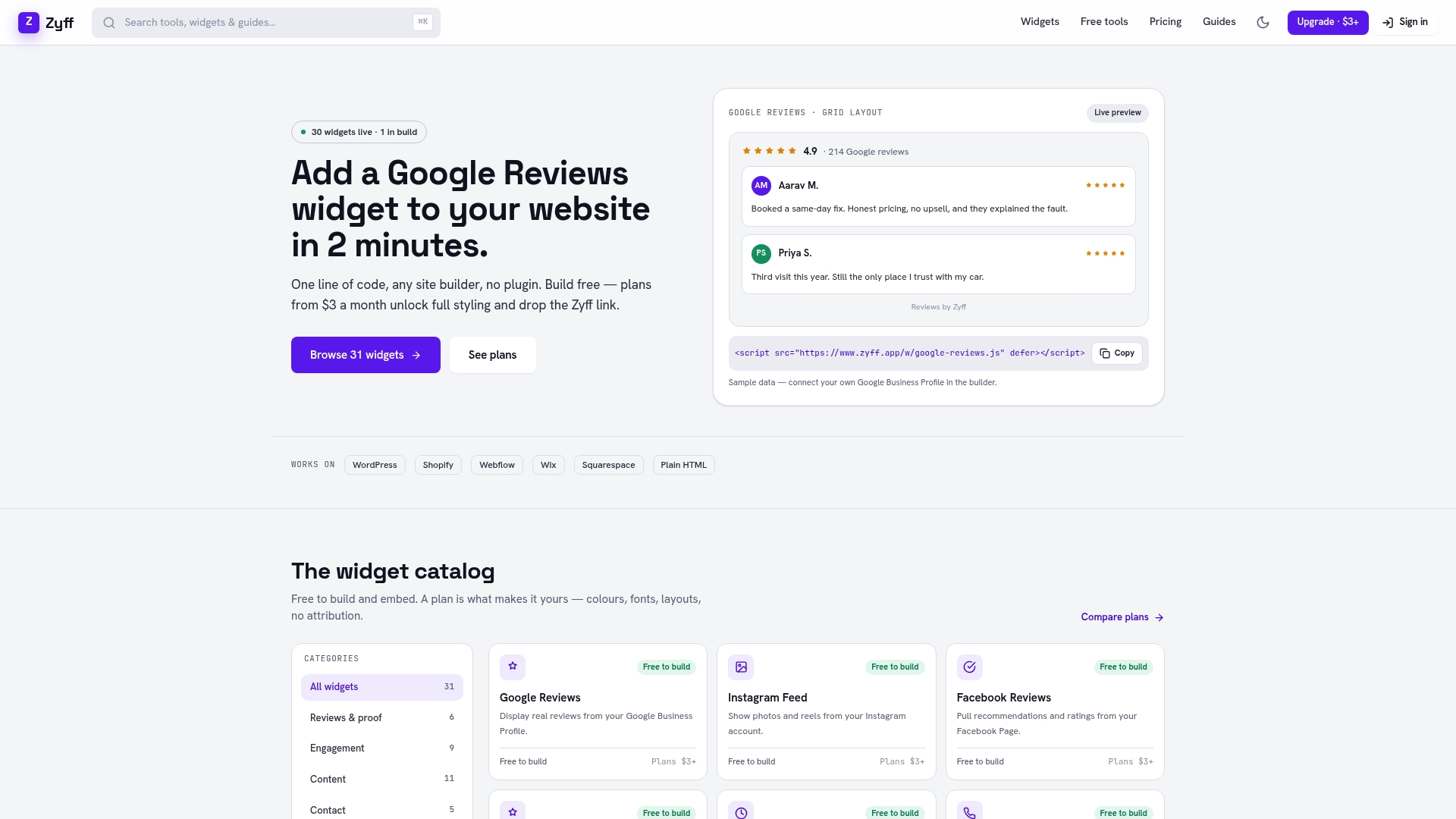
A few ways businesses put this to work:
- Showcase a handful of resolved complaints next to five-star reviews to show prospects you actually follow through.
- Embed a Facebook reviews widget or a Google review showcase directly on a landing page to put proof next to the offer.
- Build a dedicated testimonials page from updated, post-resolution reviews instead of leaving them scattered across platforms.
Every widget works free with no watermark and no account required, and if you want higher saved-widget limits or full branding removal, plans start at $3 a month on our pricing page. Try the Widget Builder to have a review panel live on your site in minutes.
FAQ
How can I turn a bad review into a positive?
Reply quickly with a specific apology and a concrete fix, then move details offline to resolve the issue directly. Once resolved, post a short public follow-up confirming the outcome, and if the customer is satisfied, you can politely ask them to update their review without offering anything in exchange.
What is the best way to respond to negative comments?
The most effective approach is a short, tailored reply: thank the person, acknowledge their specific complaint, apologize, state what you are doing about it, and invite them to continue privately. Harvard Business School research points to replies of 3 to 5 sentences as the most effective length, avoiding both curt dismissals and long defensive explanations.
How to write a response to a negative performance review?
For a workplace performance review, acknowledge the specific feedback without being defensive, ask clarifying questions if any point is unclear, and propose a concrete plan for improvement with a timeline. Keep the tone professional and forward-looking rather than disputing every point raised.
What are good negative feedback phrases?
Useful phrases include “thank you for bringing this to our attention,” “we’re sorry your experience didn’t meet the standard we aim for,” and “we’d like to make this right, please reach out to us at [contact].” These phrases work because they combine appreciation, acknowledgment, and a clear next step without sounding scripted.
How quickly should a business respond to a negative review?
Most customers expect a response within about one week, but businesses that reply within 1 to 2 business days signal more active management and tend to build stronger reputations. Setting up daily or alternate-day review monitoring is enough to hit that window consistently.
Sources
- How to Handle a Bad Business Review | CO- by US Chamber of Commerce
- Federal Register: FTC rule on consumer reviews and testimonials
- 9 tips for responding to negative online reviews | HelpScout